
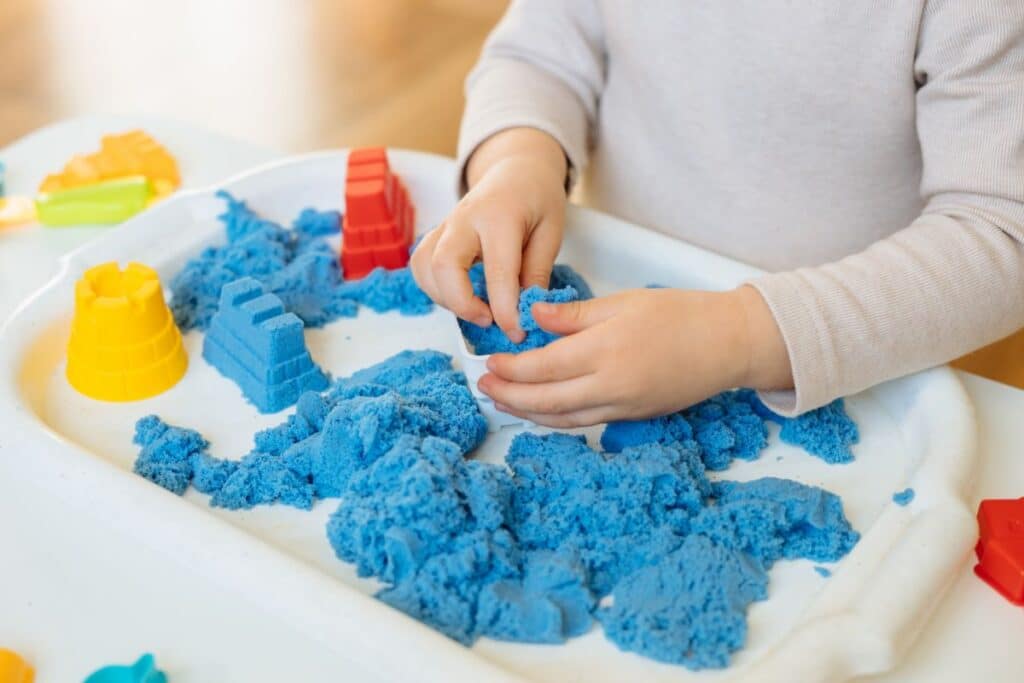
See a toddler squish playdough, splash water, or let sand drift through tiny fingers, and you are watching more than carefree fun. Those messy moments are some of the richest learning opportunities children will ever have. Sensory play, which engages the senses of touch, sight, sound, smell, taste, movement, and balance, lays the groundwork for brain development and future learning.
What Counts as Sensory Play?
Any activity that wakes up a child’s senses qualifies. Finger-painting and textured materials come to mind first, yet sensory play stretches far wider. Babies stroke different fabrics, preschoolers stir coloured water, and older children listen for birdsong in the garden. Each of these experiences feeds the brain new information and helps youngsters make sense of their world.
Why the Brain Loves Sensory Input
From birth to about six, the brain is in overdrive, creating more than one million neural connections every second. Each scent, texture, sound, or movement strengthens those pathways. When several senses fire at once, the links grow even stronger. Educational psychologist Dr Jane Healy describes these early experiences as the “mental infrastructure” every learner needs. Put simply, the more varied the input, the sturdier the structure.
Five Key Benefits
1. Cognitive growth
Handling objects and materials trains children to observe, sort, compare, and draw conclusions about them. These same habits underpin scientific thinking and problem-solving later on.
2. Language skills
Touch a rough pine cone while hearing the word “spiky” and the vocabulary sticks. Multi-sensory encounters connect words with concrete experience, building a broad, descriptive lexicon.
3. Motor development
Scooping, pouring, pinching, and moulding sharpen fine motor control. Climbing or balancing on uneven ground boosts gross motor skills and body confidence.
4. Emotional regulation
Repetitive, soothing actions, such as kneading dough or running fingers through rice, can help calm anxiety and frustration. They provide children with a safe outlet for strong emotions.
5. Social learning and executive function
Shared sensory trays teach turn-taking, sharing, and empathy. Open-ended exploration also encourages planning, persistence, and flexible thinking—cornerstones of later academic success.
Bringing Sensory Play into Nurseries
High-quality early years settings incorporate sensory play into their daily routines. Water tables, sand trays, texture baskets, paint, music, and outdoor exploration are on offer from morning to afternoon. Staff introduce new materials gradually and revisit favourites often, giving children the repetition they need to build lasting neural pathways.
“Sensory play isn’t just a messy extra—it’s how young children process the world. We see daily how it supports language, confidence and calm, especially in the under-fives. It’s one of the most valuable tools in our teaching toolkit.”
— Hopscotch Nurseries, a group of nurseries in Hove
This hands-on approach ensures that sensory learning is part of every child’s experience, not just an occasional treat.
Simple Ideas for Home
You don’t need fancy toys to make sensory magic. A washing-up bowl of warm, bubbly water and a few measuring cups can keep little hands busy for ages. Fill a tub with lentils, rice or pasta and let children scoop, pour, and bury their fingers deep. Get them involved in everyday tasks—mixing cake batter, kneading dough, peeling juicy oranges. Notice the slosh of water, the crunch of autumn leaves, the fluff of a warm towel. These little moments awaken the senses and invite children to explore. Yes, it might get a bit messy—but the smiles, giggles and growing brains are more than worth it.
Adapting for Different Sensory Needs
Not every child enjoys every texture or sound. Start with materials they find comfortable, then gradually widen the range. The aim is positive exploration, never forced participation. Skilled practitioners use the same gentle approach, ensuring all children, including those with sensory sensitivities, benefit from rich experiences.
The Long View
Neural pathways built through sensory play support reading, maths, scientific reasoning, creativity, and social confidence. Children who grow up with plenty of hands-on exploration often arrive at school ready to tackle abstract concepts because the concrete groundwork is already in place.
Final Thoughts
Sensory play isn’t just an extra—it’s how healthy development begins. By offering children a variety of sights, sounds, smells, tastes, movements, and textures, we provide their brains with the raw materials they need to thrive. Every splash, squeeze, and squelch is an investment in future learning, well-being, and resilience.
The Power of Sensory Play in the Early Years
Watch a toddler squish playdough, splash in puddles, or let sand trickle through tiny fingers, and you’re seeing more than messy fun. These playful moments are some of the richest learning experiences a child will ever have. Sensory play—anything that sparks touch, sight, sound, smell, taste, movement or balance—lays the foundations for brain development, confidence and future learning.
What Counts as Sensory Play?
If it wakes up the senses, it counts. That could be finger-painting, stirring jelly, running barefoot on grass, or listening for birdsong in the garden. Babies stroke soft blankets. Preschoolers swirl coloured water. Older children crush leaves and notice the smell. Every texture, sound and sensation feeds the brain new information and helps children make sense of their world.
Why the Brain Loves Sensory Input
In the early years, the brain is building more than a million neural connections every second. Each new sensation—a scent, a texture, a movement—strengthens those connections. When several senses are active at once, the learning gets even deeper. As educational psychologist Dr Jane Healy puts it, these early moments shape the “mental infrastructure” that all future learning rests on. The more variety, the stronger the structure.
Five Brilliant Benefits
1. Cognitive growth
Playing with real objects helps children notice, sort and compare things. These skills form the basis of problem-solving and scientific thinking later on.
2. Language skills
Touch a spiky pine cone while hearing the word “spiky,” and the word sticks. Linking language to real experiences helps build a rich, descriptive vocabulary.
3. Motor development
Scooping, pouring and moulding strengthen small hand muscles. Climbing or balancing helps build coordination and body confidence.
4. Emotional regulation
Repetitive, calming actions—like swirling water or running fingers through rice—can soothe big feelings. It gives children a safe outlet when emotions run high.
5. Social learning and flexible thinking
Sensory trays and group play invite turn-taking, sharing, and empathy. Open-ended exploration also builds patience, problem-solving and perseverance—skills that support success in school and life.
Sensory Play in Hopscotch Nurseries
In our nurseries, sensory play is woven into everyday life. From texture baskets and paint to music and messy trays, there are sensory invitations waiting every day. Outdoors, children explore mud kitchens, sandpits and nature walks. Practitioners introduce new materials gently and revisit favourites often—because repetition helps brains build strong, lasting pathways.
“Sensory play isn’t just a messy extra—it’s how young children process the world. We see daily how it supports language, confidence and calm, especially in the under-fives. It’s one of the most valuable tools in our teaching toolkit.”
— Philip Ford, Managing Director
Simple Sensory Ideas for Home
You don’t need specialist toys. Fill a washing-up bowl with warm, bubbly water and pop in some measuring cups. Pour dried lentils or rice into a tray and let children scoop, bury and sift. Let them mix cake batter, knead dough or peel juicy oranges. Go on a sound walk. Listen to the whoosh of wind or the crunch of autumn leaves. Notice the fluff of a towel or the scent of shampoo. These little moments build big brains—and the giggles are a bonus.
Supporting Different Sensory Needs
Not every child likes every texture or sound. That’s okay. Start with what they enjoy and gently expand their comfort zone. The goal is positive exploration—never pressure. At Hopscotch, we take the same approach: child-led, responsive and always inclusive.
The Long View
All this hands-on discovery sets the stage for later learning. Sensory play builds the groundwork for reading, maths, creative thinking and emotional resilience. Children who’ve had rich sensory experiences arrive at school ready to connect abstract ideas with real-life understanding.
Final Thoughts
Sensory play isn’t just an add-on—it’s how children make sense of their world. Every squish, splash and squeal helps build brains, confidence and calm. By offering a variety of sights, sounds, smells, textures and movements, we give children the tools they need to thrive—not just now, but for life.
*This is a collaborative post