
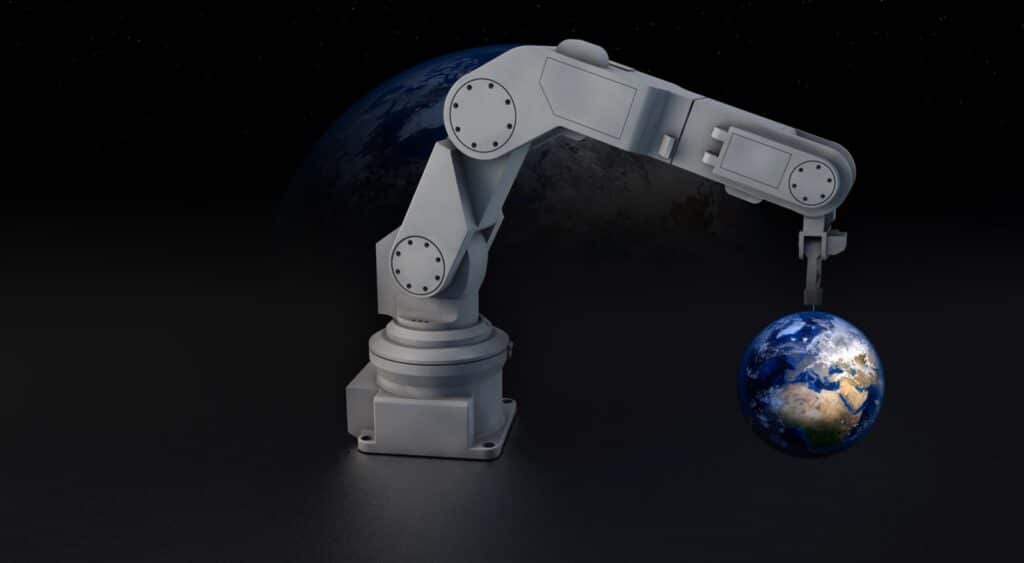
Viessmann’s latest campaign, ‘Humans of the future: how tech will allow us to coexist with nature harmoniously’ is all about exploring the ways in which technology can help humans of the future to lead greener, more sustainable lives. Technology has come on by leaps and bounds over the past twenty years, providing us with ample quick solutions to our everyday problems.
However, the last twenty years have also brought about some extreme climate change issues and an abundance of other environmental problems that have threatened the future of our planet. It seems that now is the time for brilliant tech whizzes, such as the technology engineers over at Viessmann, to focus their energies on creating innovative technology that aims to help the humans of the future live more harmoniously with nature.
With the rise of the cost of living and the dire climate crisis that we’re currently experiencing, the humans of the future could well be this planet’s salvation. Let’s take a look at some of the most popular technology predictions that aim to allow the humans of the future to coexist with nature in a more harmonious and sustainable manner.
Educational AR could transform the way we learn about the world.
AR has been used throughout the tech industry for a few years now and its popularity is only growing. Google has already created AR rendings of human anatomical structures, cultural heritage sites and much more. We’ve mastered scanning QR codes to produce 3D modelling and informational videos. It’s predicted that the humans of the future will take AR connectivity to the next level and use it far more comprehensively.
Take expensive, heavy, textbooks for example. Imagine textbooks coming to life with 3D images and videos – imagine the reduction in cost and, of course, the reduction in mass production that could come as the world of educational AR expands.
Educational AR could provide more opportunities for those seeking to further their education, despite being from less privileged backgrounds. Imagine the possibility of more people being able to access vital educational materials. For those previously doomed to live without these opportunities to suddenly be able to educate themselves and, ultimately, contribute to the preservation of our planet by joining the humans of the future in continuing to create technology that allows us to coexist with nature without damaging it. No more heavy, overpriced, and mass produced textbooks. No more printouts and worksheets. Educational AR could be as easy as having an entire course at your fingertips with just the simple scanning of a barcode.
The rise of Green Apps could save you money and tackle food poverty.
We all know that these days there’s an app for everything, but what tech engineers are working towards now includes apps that will help the humans of the future to track their own personal impacts on the world around us. Green apps could, for example, alert the user to the sustainability levels of their household. With utility bills rising, tracking the sustainability level of your household could prove to be an excellent way to save money, as well as to create a greener, happier world.
It doesn’t just stop there however, green apps could offer a way for users to track their carbon footprint and even provide unsold food to consumers for a lower price; helping to tackle the ever growing issue of good poverty. As we’ve seen in the UK, food prices are on the rise and food wastage is still a huge issue. With so many families relying on food banks, green apps could help many families and children to live healthier lives.
Fashion lovers could stay on trend without contributing to the fast fashion industry.
We all know that the fast fashion industry creates huge environmental issues – from waste products to extraordinary carbon footprints. However, it looks as though the humans of the future may be able to produce clothing that changes instantly.
Electronic clothing could save us thousands each year, not to mention saving our landfills from tonnes of waste textiles. Ultimately, we would require less clothing in our wardrobes, therefore humans of the future would likely see a reduction in pollution levels, lower carbon footprints, and monetary savings.
By continuing to work on innovative designs, Viessmann and the humans of the future will work towards creating a greener world.
Ultimately, with technology engineers like those at Viessmann, society is working towards creating a better future for everyone. Humans of the future may well have more access to education, create more sustainable and efficient households, and cut down massively on harmful carbon footprints. The cost of living could decrease once again and we could even provide cheaper food for those who need it the most. What technology do you think the humans of the future could create in order to allow them to harmoniously coexist with nature? Let me know in the comments!
*This is a collaborative post